Columbus & Franklin County, Ohio
Basement Waterproofing for Columbus Homes Built on Wet Clay Till
Basement waterproofing in Columbus is mostly a story about clay and old pipes. Much of Franklin County sits on dense glacial till that holds water close to the surface through winter and spring, and the city itself says homes built before the 1960s send their foundation drains straight into the sanitary sewer. Here is how that shows up in a basement, and what dries it out.
Most wet Columbus basements are dried from the inside with drain tile and a sump. Fixr's 2026 guide gives $3,000–$10,000 for a typical basement waterproofing job. This Old House (2026) prices an interior system at $2,000–$6,000 and digging outside at $7,000–$15,000.
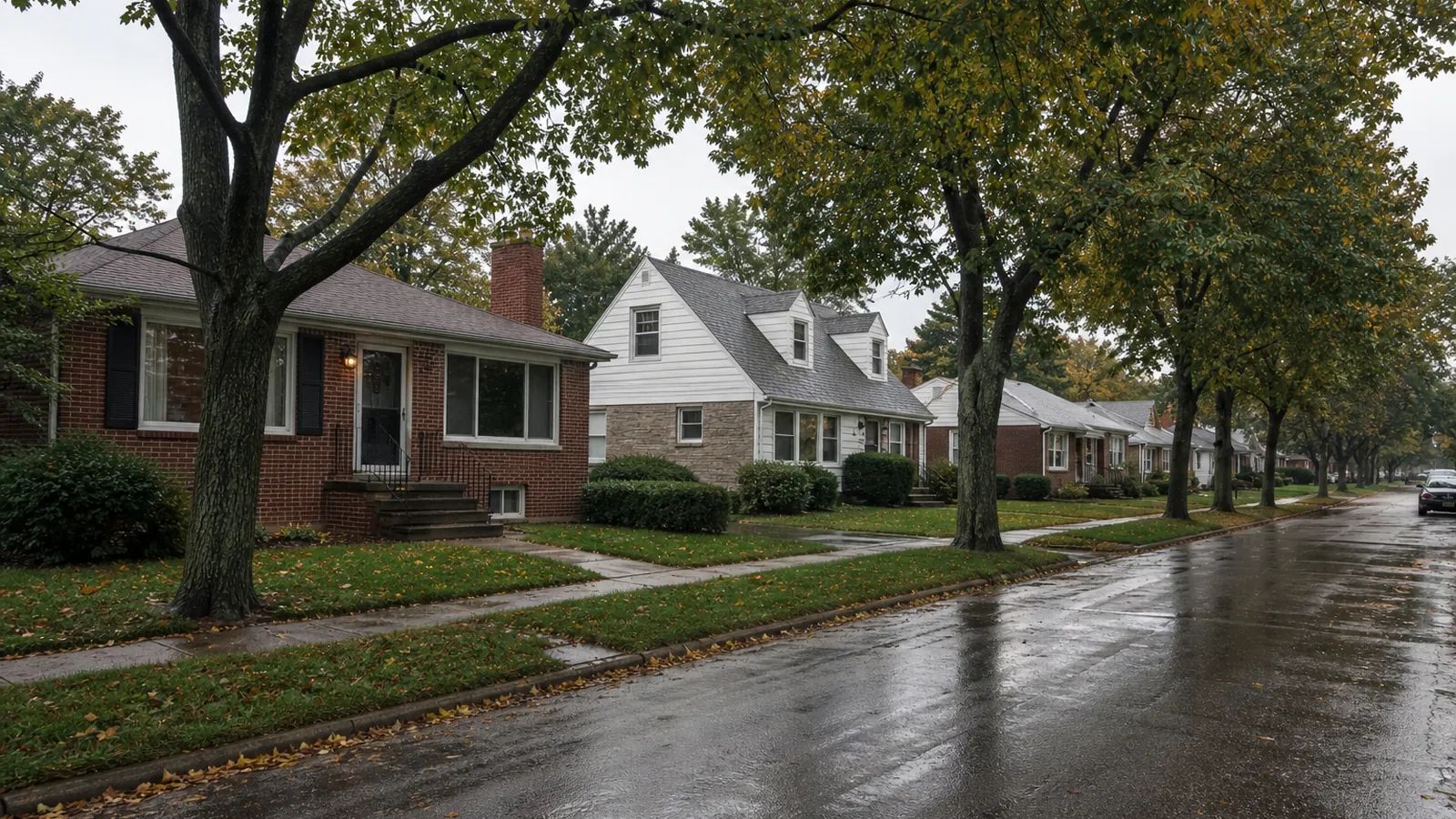
What sits under a Columbus yard
Three soils cover close to half of Franklin County's mapped acreage: Crosby and Bennington, somewhat poorly drained silt loams formed in glacial till, and Kokomo, a very poorly drained soil in low spots (USDA NRCS). Bennington's official description places a perched water table at a depth of 6 to 12 inches between November and May; Crosby's sits 6 inches to 2 feet down in winter and spring; and in a Kokomo hollow the water can stand at or above the ground. On about three quarters of the rated land, the seasonal high water table rises to within 18 inches of the ground.
The Ohio Department of Natural Resources adds that till covers most of the county, while valleys such as the Olentangy, Alum Creek and Big Walnut Creek hold sand and gravel outwash. A house on a well-drained terrace can stay dry for decades; one dug into flat till sits in wet ground for months.
Basement waterproofing and the year your house was built
The City of Columbus says sump pumps have been a standard requirement in new homes since the mid-1960s, and that in homes built before the 1960s the foundation drain connects directly to the sanitary sewer. About one in four Columbus homes (25.2%) predates 1960 (U.S. Census). In those houses, groundwater collected around the footing was never pumped outside; it went down the same pipe as the toilets. When that sewer fills in a storm, the water has a short way back into the basement.
A house from the 1970s or later usually has a pit and pump already, so the question there is whether the pump, the drain feeding it and the discharge line still work. Read sump pump installation in Columbus or, for the city's own programs, Blueprint Columbus and Project Dry Basement.
Pages for a Columbus basement
- Inside, outside or injected: choosing a methodInterior drain tile, exterior excavation and crack injection compared, with Columbus inspection rules.
- Sump pump installation and backupsNew pits in older houses, replacement pumps, battery backups and where the water should go.
- Cracked or leaning basement wallsWhich cracks only leak and which mean movement, the repair options, and Columbus licensing for structural work.
- Columbus basement waterproofing cost guideDrain tile, sump pumps and backups, exterior digs, cracks and walls, plus the city's 2026 permit fees.
Background worth reading first
- Blueprint Columbus and Project Dry BasementWhat the city's sewer programs install, who qualifies, and what they leave to the homeowner.
- Reading the clues: where the water comes fromFloor drains in storms, wet seams, missing sumps, sideways cracks and musty finished rooms, one at a time.
- Basement water and the Ohio disclosure formWhat sellers must say about past water, what buyers can ask for, and the paperwork that helps both.
Summer storms do more than snowmelt here
John Glenn Columbus International Airport averages 41.57 inches of precipitation a year but only 28.2 inches of snow (NOAA 1991–2020 normals). June and July are the wettest months, at 4.33 and 4.67 inches, and spring adds 11.46 inches from March to May while the till is already full. The most recent federal disaster declaration covering Franklin County followed storms and flooding from August 10 to 22, 2026 (FEMA DR-4945). A basement that stays dry through the thaw but takes water after a July cloudburst is usually telling you about downspouts, grading or a pump that cannot keep up.
Three ways basement waterproofing is done
- Inside: drain tile feeding a sump. Perforated pipe laid beside the footing, under the floor edge, leads water to a pit, and the pump lifts it outdoors. It is the usual answer for a basement that seeps at the floor seam. Columbus inspects these systems against the approved plans.
- Exterior excavation. The wall is dug out to the footing, sealed with a membrane and given a new drain. It costs the most and suits a wall face that is failing.
- Crack injection. For one leaking crack in a poured concrete wall, sealed from inside.
Before any of them, check the cheap things: the city's own downspout work for Blueprint Columbus sends roof water at least seven feet from the house. The methods are compared on inside, outside or injected.
Who may do the work in Columbus, and what this site is
Ohio's Construction Industry Licensing Board covers five trades (electrical, plumbing, HVAC, hydronics and refrigeration), and waterproofing is not among them. Columbus fills the gap: contractors need the right city license or registration before applying for permits, residential basement waterproofing is a scope of the city's Home Improvement Limited Contractor license, and structural work on a one- to three-family house needs a city home improvement contractor license (Building and Zoning Services). Suburbs set their own rules.
Columbus Basement Help repairs nothing itself. When you use the form, your note is passed to a single independent specialist in the Columbus area, who pays this site for each referral. Ask the specialist which city license they hold, then compare prices in the Columbus basement waterproofing cost guide.
Questions homeowners ask
Summer storms wet my basement but winter doesn't. What gives?
Because Columbus's heaviest rain arrives in June and July, often in short bursts. NOAA's normals for the airport put July at 4.67 inches, the wettest month, with about 8 days a year bringing an inch or more. A gutter that overflows or a downspout that dumps at the wall puts that water straight against the basement.
Was my Columbus house built with a sump pump?
If it was built after the mid-1960s, probably; the City of Columbus says sump pumps have been standard in new homes since then. Before the 1960s, the city says, foundation drains were tied directly to the sanitary sewer. Look for a lidded pit in the basement floor, usually near an outside wall, with a pipe leaving through the wall.
Does Columbus inspect interior drain tile?
Yes. The city's Building and Zoning Services guidance on interior perimeter tile systems says the system is inspected against the details on the approved plans, must be installed complete, and cannot be altered or removed after inspection. Ask whoever bids the job who applies for the permit and whether its fee is in the price.
Will a new sump pump stop water coming through my walls?
Not on its own. The City of Columbus says in its sump pump brochure that a pump will not stop water seeping through windows or walls, though in most cases it improves a basement's drainage. Wall seepage is usually handled with drain tile feeding the pump, outside grading and downspouts, or sealing a single crack.
Sources
- USDA NRCS Official Series Description: Bennington series
- Ohio Department of Natural Resources: Ground Water Pollution Potential of Franklin County (1995)
- City of Columbus, Blueprint Columbus: Sump Pumps brochure
- NOAA NCEI 1991-2020 Climate Normals (product page)
- City of Columbus Building and Zoning Services: Contractor Licenses
What is the basement doing?
Tell it the way you would tell a neighbor: water along the back wall after every downpour, a floor drain that gurgled up in August, no sump pit at all. One independent basement specialist who works around Columbus reads it and gets in touch.